
When you’re preparing fragile or valuable items for a move, you’ll eventually hear the term “double boxing.” Many movers in Plano, TX, swear by it, while others warn that it adds weight, bulk, and even risk to your belongings.
So, is double boxing really safe? The answer is yes, when done correctly and applied to the right items.

What Is Double Boxing?
Double boxing simply means placing a fully packed box inside a second, larger box with cushioning material between the two. Think of it as building a “shock-absorbing suspension system” around fragile items.
But the key is this: double boxing is only effective when each layer is packed correctly.
The Benefits of Double Boxing
For fragile items or objects sensitive to shock, double boxing is especially recommended. Some of the benefits it offers include:
- It Adds Multiple Impact Barriers: If the outer box takes a hit, the inner box reduces the force that reaches the item.
- It Reduces Vibration and Shock: Especially important for electronics and items with delicate internal components.
- It Minimizes Crush Damage: A double-box system disperses pressure across two structures instead of one.
- It Protects Against Punctures: A sharp object or corner may penetrate one box—but rarely two.
The Disadvantages of Double Boxing
Nevertheless, double boxing can cause issues if used incorrectly or for the wrong items. For instance:
- It Adds Weight: Your package becomes heavier, increasing the risk of drops if handled improperly.
- It Can Encourage Over-Packing: Overstuffed boxes reduce cushioning space and increase pressure on the inner contents.
- It’s Not Ideal for Large or Already Heavy Items: For kitchen appliances or oversized decor, the added box makes lifting more difficult and increases the risk of injury.
- It Fails if Poorly Packed: If your inner or outer box isn’t correctly cushioned, the double-box method offers little benefit.
So, How Can I Double Box Safely?
Now, the secret of effectively double-boxing lies in the details of how you prepare each box. The way professional movers recommend doing it includes
Step 1: Pack the Inner Box Properly
Start by packing the inner box as securely as possible. Each item should be wrapped individually—bubble wrap, foam sheets, or packing paper all work well. The goal is to create a snug fit, so make sure there’s no space inside the box.
Step 2: Cushion the Inner Box
Once the inner box is packed, turn your attention to cushioning. Before placing it inside the larger box, add a thick layer—around two to three inches—of protective material at the bottom.
Air pillows, bubble wrap, foam inserts, or crumpled kraft paper all provide reliable shock absorption. Try to avoid newspapers, since they compress easily and don’t offer consistent protection.
Step 3: Insert the Inner Box
When you lower the inner box into the outer one, it should rest in the center with an even amount of space on every side. That space is what absorbs impact, so don’t skip it. After the inner box is in place, fill the remaining sides and the top with firm cushioning.
Step 5: Seal and Label Correctly
Finish by sealing the outer box with durable packing tape. Finally, label it clearly with instructions like “FRAGILE,” “THIS SIDE UP,” and “HANDLE WITH CARE.” These markings help ensure your movers understand the box contains delicate items and treat it accordingly.
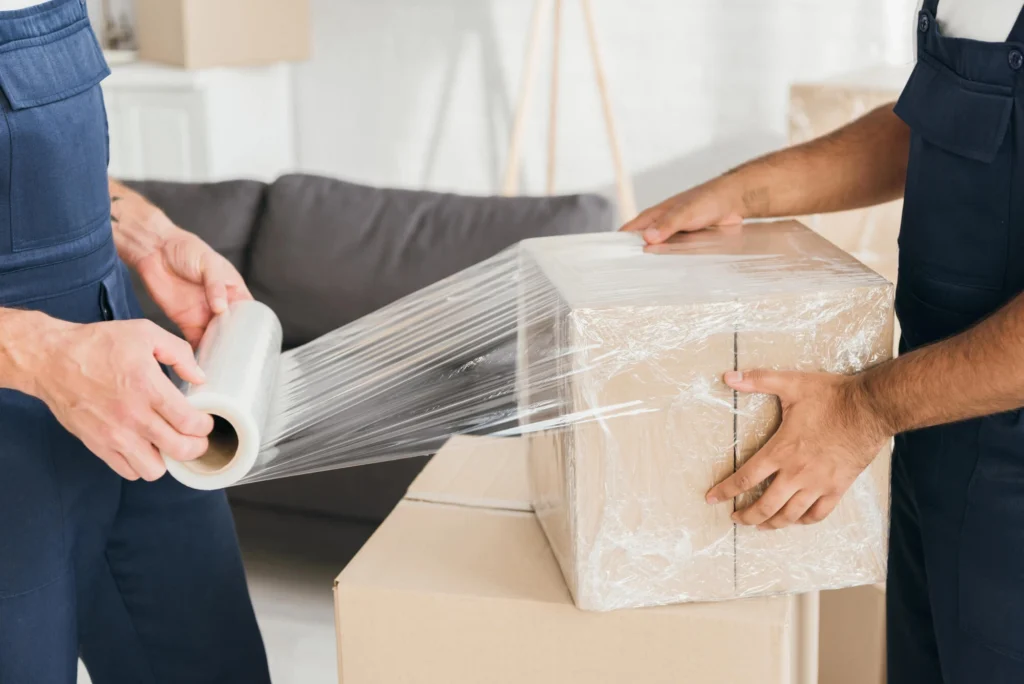
Pack Your Belongings Smartly with These Tips from Movers in Plano, TX
Double boxing is one of the safest packing methods available, especially for fragile and high-value items. However, it only delivers maximum protection when the right materials are used, the boxes are sized correctly, and each layer is properly cushioned.
For heavy, oversized, or sturdy items, single-boxing with reinforced padding may be a safer and easier option. Do you need some help figuring out what’s best on a case-by-case basis? Maybe professional packing services will be best for you. Find a location near you and contact Pink Zebra Moving for a smooth move free of damage!