
Ask any team of experienced loading and unloading movers, and they’ll tell you: packing a truck isn’t guesswork—it’s strategy. If you’ve ever tossed items into a moving truck and hoped for the best, you know how quickly that approach turns into shifting loads, crushed boxes, and scratched furniture.
Professionals don’t just load things—they engineer space. Every item, from a small lamp to a large sectional, gets placed with intention. The result? A truck packed tighter, safer, and more efficiently than you ever thought possible.
Here’s a behind-the-scenes look at how pros turn a pile of household items into a perfectly packed load—no gaps, no shifting, no chaos.

How Professionals Build the Perfect Load
Packing a truck is part science, part puzzle-solving, and part muscle memory. The goal is to fill every inch of space while protecting your stuff and keeping weight evenly distributed.
1. Heavy Items Set the Foundation
The heaviest items always go in first. Large furniture, appliances, safes, and toolboxes are packed along the walls closest to the cab.
- Why? These pieces create a solid base and keep the center of gravity low. That reduces shifting and prevents damage to lighter, more fragile items.
- How? Movers use dollies, lifting straps, and team coordination to place heavy items against the walls first, with weight balanced side to side.
Extra tip: Place flat items like mirrors or mattresses along the sides to create natural barriers for other items later in the load. Even weight distribution helps prevent issues like swaying, brake instability, or tire strain, especially during long-distance moves or quick turns.
Starting strong with heavy items sets the tone for the rest of the job.
2. Stack Strategically (Not Just High)
Stacking isn’t about piling boxes to the ceiling. It’s about creating stable layers, protecting fragile contents, and maximizing vertical space.
- Place the heaviest boxes on the bottom and lighter, fragile ones on top.
- Use soft items as shock absorbers. Bags of clothing, bedding, and towels are great for filling gaps and cushioning breakables.
- Line up box edges. Staggered or uneven stacking leads to topples mid-ride.
Pros treat each box as a building block, ensuring every layer is balanced and packed edge-to-edge. Stacks shouldn’t wobble. If they do, they get repacked.
3. Fill Gaps Like a Puzzle Master
Gaps are the enemy. Even small ones can cause items to shift during transit, leading to breakage or a messy unload.
- Use smaller boxes, pillows, or soft bags to fill holes between furniture legs or awkward shapes.
- Stuff items inside furniture. Drawers, cabinets, and ovens can carry lightweight items if padded properly.
- Tuck fragile items in tight. Fill gaps around delicate pieces to prevent rattling or tilting.
Every inch counts. Efficient movers leave no space unused and no item floating without support.
4. Secure with Straps and Tie-Downs
No matter how perfectly stacked, loads still need support. Professional movers never rely on balance alone—they anchor key sections using straps.
- Straps go around large furniture, appliances, and stacked boxes every few feet of depth.
- Use anchor points inside the truck to prevent forward or sideways movement.
- Check tightness after major sections are loaded—adjustments may be needed.
Think of straps as seatbelts for your belongings. They keep everything where it should be, even on bumpy roads or sharp turns.
5. Load for the Unload
Movers don’t just think about how items go into the truck—they plan how they’ll come out. Loading for efficiency during unloading saves serious time.
- Last in = first out. Items needed right away go in last—like tools, beds, or kitchen essentials.
- Group by room. Packing items together by destination makes it easier to unload straight into the right space.
- Keep hardware accessible. Bag and label screws or bolts for reassembly and place them in a visible spot.
Smart loading makes for a far less stressful move-in process. No digging. No surprises.
6. Use Equipment to Work Smarter
Pros rely on more than just muscle. They use tools that speed things up and protect both items and people.
- Furniture dollies and hand trucks move heavy pieces without strain.
- Lifting straps help two movers share weight evenly when carrying large furniture.
- Moving blankets and plastic wrap protect surfaces and hold drawers or doors in place.
Most movers also use ramps, sliders, and forearm forklifts for tricky angles, heavier loads, and navigating tight entryways with minimal risk. These tools allow movers to position items precisely without bumps, scratches, or fatigue that leads to mistakes.
7. Know When to Say “Too Much”
Overpacking is risky. A truck loaded beyond its capacity becomes dangerous—harder to drive, harder to unload, and more likely to cause damage.
- Professional movers assess volume early. If it won’t fit, they adjust or add a second load.
- Weight limits matter. Too much weight in the back of the truck can cause fishtailing or uneven braking.
- If you can’t see out the back safely, it’s time to stop and reassess.
A good load fills the truck, fits tightly, and stays within safe limits.
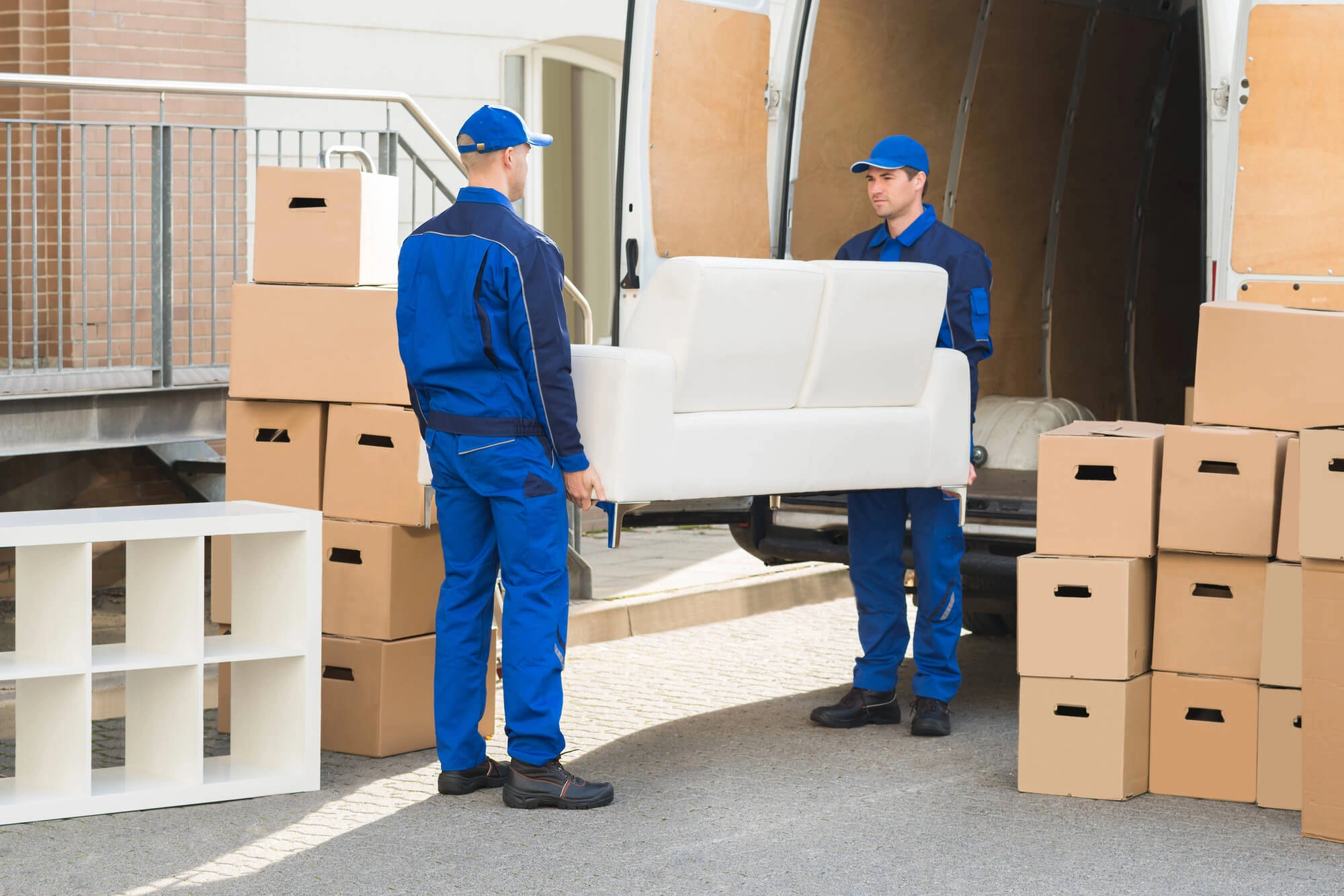
Why Loading and Unloading Movers Make It Look Easy
If you’ve ever tried loading a moving truck yourself, you know how quickly it can become overwhelming. There’s real strategy behind the way we pack. What looks like luck is actually years of practice, pattern recognition, and a plan built on efficiency and care.
We don’t just show up to move things—we show up to make moving easier. We know how to size up a load in minutes, choose the right starting point, and finish strong without wasted space or broken items. It’s a process, and it works.
Whether you’re dealing with stairs, tight corners, fragile heirlooms, or a full household worth of belongings, you can count on us to treat your stuff like it matters—because it does.
Let us take the stress off your shoulders. If you’re looking for professional movers who pack with precision and care, we’d love to help. Reach out to us today and experience a move that feels smooth from start to finish.