
Most storage advice for a move reads like a catalog: self-storage units, portable containers, climate-controlled warehouses, and so on. What that list skips is the actual decision that matters, which is how long the gap between move-out and move-in actually is. Grand Rapids movers see this play out constantly, and the length of that gap, more than any list of storage types, determines which option is genuinely worth paying for.

The Question That Decides Everything
A gap you can name in exact days, a two-week overlap between a lease ending and a closing date, points toward one kind of solution. A gap that depends on a home sale, a renovation timeline, or a job start date keeps shifting points toward a completely different one.
Treating both situations the same way is how people end up either overpaying for flexibility they never use or locked into an arrangement that cannot bend when their timeline does.
What Storage-in-Transit Actually Is
For the first kind of gap, many long-distance moves already include an option called storage-in-transit, or SIT. Under federal rules that apply to interstate movers, SIT is temporary warehouse storage of your shipment while it is still technically in transit, meaning it stays on the mover’s own paperwork rather than becoming a separate rental you manage yourself. It is built for a bounded delay, not an open-ended one, which is why Grand Rapids movers handling a cross-country relocation will usually ask about your closing date before recommending it.
SIT comes with its own fine print worth knowing before you agree to it. Warehouse handling and final redelivery are typically billed as separate charges on top of storage. Federal rules require your mover to notify you if your shipment goes into SIT under certain circumstances, including the name and contact information of the facility holding it.
None of this is hidden exactly, but it rarely gets explained until the invoice shows up, and knowing your rights here matters just as much as knowing the storage options themselves.
When Renting Your Own Unit Wins Instead
When the timeline is genuinely open-ended, a rented unit you control directly usually wins instead. You are not paying a second delivery charge to get your own items back, and you can access them on your own schedule rather than coordinating a pickup with a moving crew’s availability.
This matters just as much for a business relocation as for a household move, since office equipment sitting in limbo between two leases faces the same timing problem.
Questions Worth Answering Before You Choose
A few questions worth answering before choosing either path:
- Do you have a firm move-in date, or is it still moving around
- Will you need to get into any of these boxes before the move is finished
- Is this a long-distance move, since SIT is specifically a long-distance and interstate concept
- What does a second delivery charge do to the total cost if the gap runs longer than planned
None of this is complicated once you know which questions to ask. Still, almost nobody asks them until they are already mid-move and improvising. Grand Rapids movers who regularly handle long-distance relocations can tell you within a few minutes which option fits your specific dates, rather than handing you a generic list of storage types to sort through on your own.
Families managing frequent relocations run into this same timing question even more often.
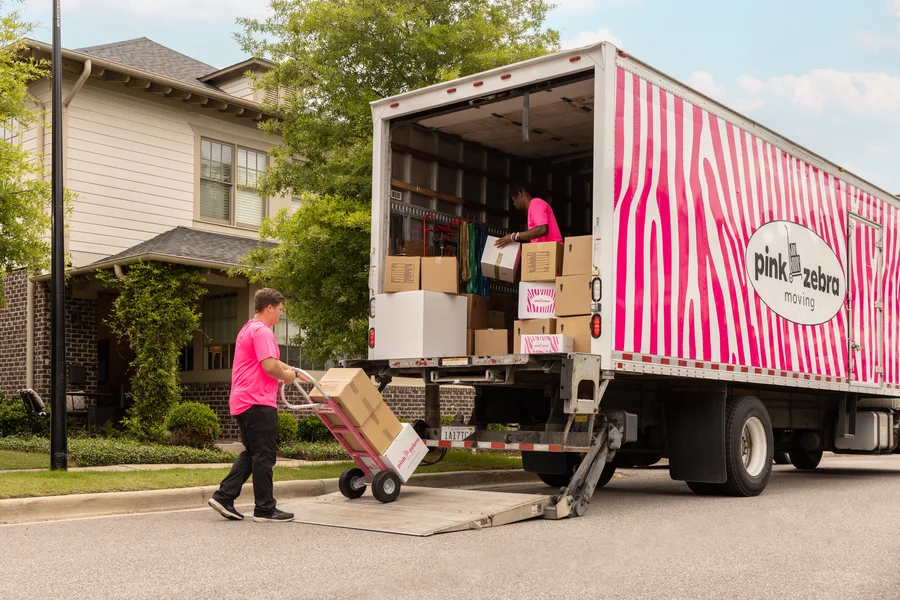
Ask Grand Rapids Movers About Storage-in-Transit Before You Book
If your move has a gap and you are not yet sure how long it will last, talk it through with experienced Grand Rapids movers before booking anything, rather than defaulting to whatever option sounds most familiar. Contact Pink Zebra to walk through what your specific timeline actually needs.