
A refrigerator weighs 200 to 400 pounds. A washer or dryer runs 150 to 200. Neither one has a convenient place to grip, and both are exactly the wrong shape for two people to carry down a staircase. Mobile movers see the aftermath of DIY appliance moves more often than most people would guess, and it is rarely the appliance that gets hurt first.

Why This Is a Real Injury Risk, Not Just an Inconvenience
Back injuries account for roughly one in five workplace injuries overall, and the vast majority of those happen during a lifting task rather than from a single dramatic accident. A moving day rarely counts as a workplace by any legal definition, but the physics do not know the difference. The same forces that hurt a warehouse worker lifting incorrectly are just as present in a driveway on a Saturday morning, which is one reason mobile movers train specifically on lifting mechanics rather than relying on brute strength.
What Actually Goes Wrong With a Refrigerator
Refrigerators get most of the attention in moving guides, and for good reason. They are heavy, awkward, and expensive to replace if something goes wrong internally. Keeping the unit upright throughout the move matters because the compressor oil and refrigerant are designed to remain in specific chambers, and tipping the unit on its side can allow that oil to migrate into the cooling lines. If a refrigerator does end up on its side or back during transport, giving it several hours upright before plugging it back in gives everything time to settle before the compressor has to work again.
The Washer Risk Most Guides Skip Entirely
Washers get skipped over far more often in moving advice, and they carry their own specific risk that has nothing to do with weight. The drum inside a washing machine sits on a suspension system built for one job: to absorb the motion of a spin cycle, not the vibration of a truck bed for three hours.
Securing that drum with shipping or transit bolts, the same hardware used when the unit was first delivered, keeps the suspension from taking damage it was never designed to handle during transport. Without them, a washer can arrive at its destination looking fine on the outside. At the same time, the internal suspension is already compromised.
Why a Dolly Changes the Whole Equation
A dolly changes the entire equation for both appliances. Instead of two people fighting gravity and an awkward center of mass, a dolly lets one person control the tilt. At the same time, a second manages balance and steering. That difference in mechanics, not just extra manpower, is why professional crews rarely strain themselves moving the same appliances that send DIY movers to urgent care.
A few specific risks worth knowing before you attempt either appliance yourself:
- A refrigerator lying on its side can leak compressor oil into the cooling lines within minutes
- A washer drum without transit bolts can suffer suspension damage that only shows up after weeks of use
- Two people lifting from awkward angles face far more back strain than one person managing a properly loaded dolly
- Stairs multiply every one of these risks at once
None of this means every move requires professional help for every item. It does mean that heavy appliances are a reasonable place to draw the line, especially when the alternative is a strained back that outlasts the move itself by several weeks.
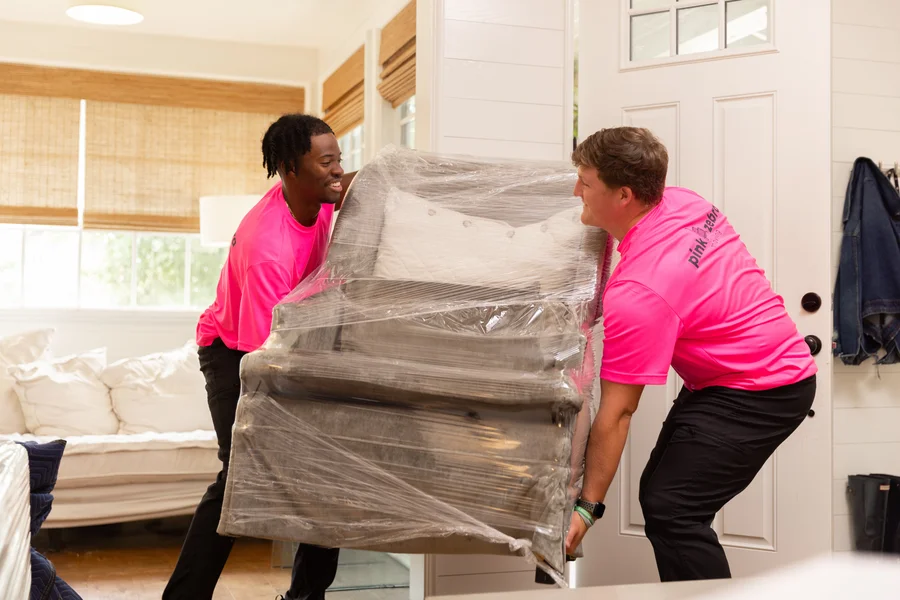
Mobile movers who handle this kind of lifting daily know the specific failure points for each appliance type, which is different from simply being strong enough to carry something heavy.
Let Mobile Movers Handle What Puts Your Back at Risk
If your next move includes a refrigerator, washer, or anything else that makes your back hurt just thinking about it, let mobile movers handle the parts that actually carry risk. Contact Pink Zebra to talk through what your move needs.